
Starting a senior home care business will cost anywhere from $50,000 to $175,000 depending on way the start-up is structured.
It may cost less to start a home care business from scratch, but buying into a proven senior care franchise is faster with fewer headaches.
Franchises may also end up being cheaper over time because they already have a proven model while startups have to go through years of trial and error to discover what works.
Home health business is one of the most meaningful and scalable opportunities in healthcare today.
Demand is growing fast as the population ages, families seek alternatives to assisted living, and seniors want to remain independent in their own homes.
But before you own a senior business, it is critical to understand the real costs, options, and long-term financial implications.
Are you thinking about starting your own home care business, but don’t know where to start?.
This article explains why understanding the full picture is essential and walks you through the cost factors, business models, and strategic decisions involved in owning a home care business or joining an elderly care franchise.
If you are serious about building a sustainable senior care business, this guide will give you clarity and confidence.
Why Starting a Senior Home Care Business Is So Valuable

The senior care industry continues to expand year after year. Families need trusted support, hospitals are discharging patients earlier, and seniors prefer personalized care at home.
A well-run senior home care business serves a real need while offering strong revenue potential.
This type of business is valuable because it combines recurring demand with community trust. When done correctly, it can grow into a long-term asset that provides income, flexibility, and purpose.
That is why more entrepreneurs are looking to buy a senior care business or invest in senior care franchises.
When Home Care Companions Are Most Helpful
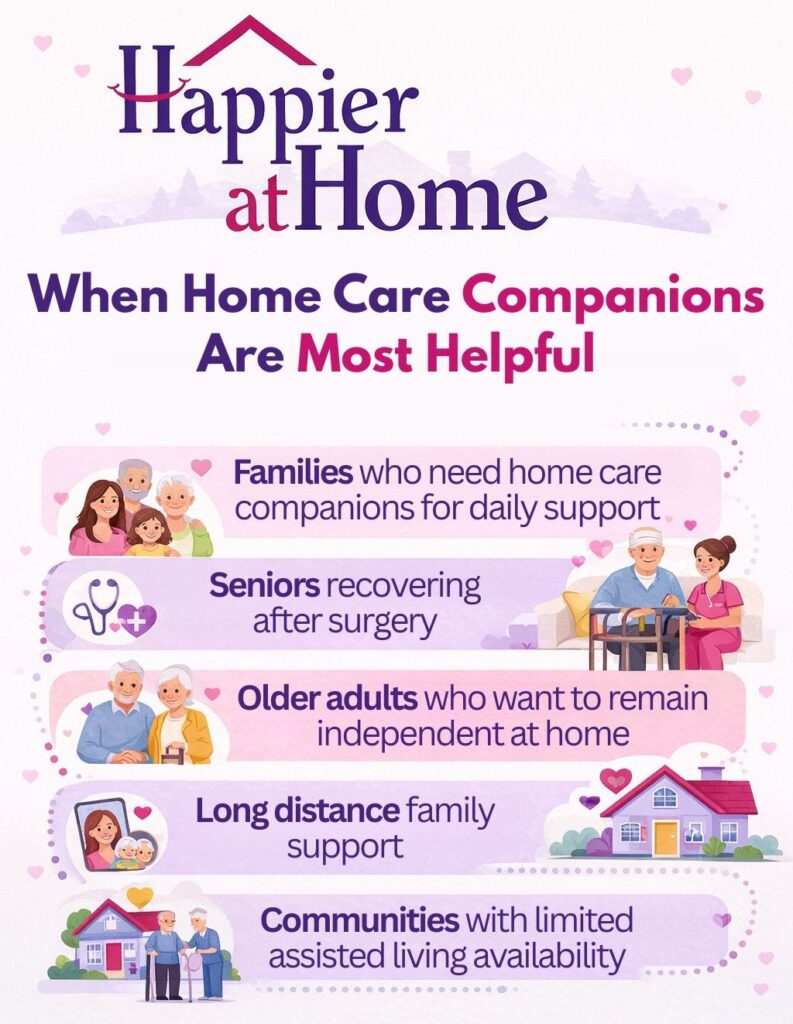
A senior care business creates value across multiple scenarios, including healthcare transitions, family support, and aging in place. These are some of the most common use cases:
- Families who need home care companions for daily living support
- Seniors recovering after surgery or hospitalization
- Older adults who want to stay independent but need help with routines
- Adult children who live far away and need reliable care coordination
- Communities with limited assisted living availability
Each of these situations creates consistent demand and long-term client relationships.
How to Start a Senior Home Care Business the Right Way
Understanding how to start a senior home care business means understanding both ownership paths and how they work in practice.
Owning Your Own Business Independently
Independent ownership gives full control. You choose your brand, services, pricing, and systems. This approach requires a strong home health business plan, deep understanding of compliance, and the ability to manage marketing and staffing alone.
Success depends on experience, local market knowledge, and patience. Many independent owners eventually hire consultants or invest in software to catch up operationally.
Starting Through a Senior Care Franchise
A senior care franchise provides a proven framework. You operate under an established brand with systems already tested in multiple markets. Training, technology, and marketing support are built in.
For entrepreneurs new to healthcare, this model reduces risk and accelerates growth. It also increases resale value when you decide to buy a senior care business or exit later.
Startup Costs When Launching a Senior Care Business

Understanding startup costs helps you build a realistic home health business plan and avoid surprises. Costs vary by state and business model, but several core categories apply when owning a home care business.
Note: These costs are based on industry averages and are realistic estimates. Startup costs may vary depending on many factors.
Business Registration and Licenses
Licensing is one of the most important and misunderstood steps. Each state has its own requirements for operating a senior care business, and navigating them incorrectly can delay or stop your launch.
Most owners spend between $2,000 and $3,000 on state application fees. Many also hire a licensing consultant to ensure compliance, which typically costs $5,000 to $8,000.
Franchise owners often receive guidance from the franchisor, reducing confusion and risk.
Without proper licensing, you cannot legally operate, bill clients, or hire caregivers.
Insurance and Legal Fees
Insurance is mandatory and protects your business from risk. General liability insurance, workers compensation, and professional liability coverage are all required to own a home care business.
Insurance costs commonly exceed $5,000 annually. Legal fees add additional expense but help you set up contracts, policies, and employment documentation correctly.
A strong healthcare franchise often provides templates and guidance that reduce legal mistakes.
Marketing and Branding
Marketing determines how fast your business grows. Independent owners must build everything from scratch, including websites, branding, and outreach. Franchise owners usually receive a complete marketing foundation.
Expect to spend several hundred to over one thousand dollars per month on local marketing. This includes digital advertising, community outreach, referral development, and brand visibility.
Strong marketing is essential to own a senior business that scales.
Payroll and Staffing Are the Largest Ongoing Costs
Payroll is the biggest operational expense in any senior care business. Caregivers are the heart of your service, and competitive wages reduce turnover and improve client satisfaction.
Successful owners understand local wage standards, incentive structures, and scheduling efficiency.
Many senior care franchises provide systems to manage hiring, onboarding, and retention more effectively than independent startups.
Poor staffing strategy is one of the main reasons new home care businesses struggle.
Owning a Home Care Business vs Joining an Elderly Care Franchise
One of the most important decisions is choosing between independent ownership and a senior care franchise. Both paths can work, but they have very different cost structures over time.
Starting From Scratch
Starting independently is cheaper upfront. You avoid franchise fees and royalties, which can make entry easier. Many people choose this path because it feels flexible and affordable at first.
However, over time, costs increase. You must develop systems, marketing, compliance processes, training programs, and operational tools on your own.
These hidden costs add up through trial and error, slower growth, and missed opportunities.
How Much To Buy A Home Care Franchise
A franchise requires an upfront investment usually between $75,000 and $150,000.
Most models also include a 5% royalty and a 1% marketing fee.
While the initial cost is higher, franchises provide everything from licensing support and branding to operational playbooks and ongoing training.
Over time, this often results in faster growth, stronger margins, and fewer costly mistakes.
In many cases, starting from scratch is cheaper initially but more expensive long term when trying to recreate what a franchise already offers.
Why You Should Invest in a Senior Care Franchise

A senior care franchise is more than a business. It is an investment in infrastructure, brand trust, and operational efficiency.
Franchises help owners avoid costly mistakes and provide support during growth phases. They also make it easier to recruit caregivers and build referral relationships with hospitals and professionals.
For many entrepreneurs, the combination of demand stability and structured support makes senior care franchises one of the most attractive healthcare investments available.
Contact us for more information on becoming a Happier At Home franchisee.
Long-Term Growth and Profitability in the Senior Care Business
A successful senior care business focuses on consistency and relationships. Retaining caregivers and clients is more valuable than rapid expansion without structure.
Franchise owners often reach profitability faster because systems are already optimized. Independent owners can achieve strong margins but must invest time and money refining operations.
In both cases, strong leadership and ethical care delivery create long-term success.
With proper planning, realistic funding, and a clear strategy, you can own a home care business that grows, serves families well, and becomes a lasting asset in your community.
FAQs
1. How long does it usually take for a senior home care business to become profitable?
Most senior home care businesses take 9 to 18 months to reach consistent profitability. The timeline depends on local demand, caregiver availability, referral relationships, and how strong your initial systems are.
Businesses with clear processes and steady client acquisition tend to stabilize faster.
2. Do senior home care businesses require medical staff or nursing licenses?
Non-medical senior home care businesses typically do not require nurses or medical licenses. Services focus on daily living support and home care companions rather than clinical care.
However, state regulations vary, so it is important to confirm requirements before launching.
3. What makes a senior care business attractive to buyers or investors later on?
Buyers look for stable client rosters, low caregiver turnover, strong referral partnerships, clean financial records, and documented systems.
A well-run senior care business with recurring revenue and brand recognition is often easier to sell and commands a higher valuation.
4. Can a senior home care business be run remotely or semi-absentee?
Yes, many owners operate with a manager handling daily operations once systems are in place.
Scheduling software, caregiver coordination tools, and clear policies make remote oversight possible. Franchises often support this model more easily due to standardized processes.
5. How sensitive is a senior care business to economic downturns?
Senior care is generally considered recession-resistant. Families prioritize care for aging loved ones even during economic slowdowns.
Demand may shift slightly toward fewer hours, but the overall need for senior care services remains strong and consistent.